超過六成香港網站項目因需求不清而超支延誤。本文拆解從規劃、定義到驗收的五大核心步驟,幫助企業把不確定性轉化為可預測的商業成果。清晰的需求清單與量化驗收標準,才是成功交付的真正底氣。

When a company is preparing to launch a website project, the first thing to do is not choosing technology or comparing quotes, but rather drafting a document that clearly outlines requirements, scope, and acceptance criteria for all parties involved. For small and medium-sized enterprises in Hong Kong and cross-border businesses, whether a website project can be successfully completed often hinges on how well the initial requirements are defined: which pages must be built, which features belong in phase two, and what standards will be used for acceptance upon launch. This article provides a ready-to-use decision-making framework and an execution checklist to help you determine how to move forward with your Hong Kong web development project.

Traditional customer acquisition relies on ad spending; future growth depends on closed loops. By leveraging GEO optimization and AI-CRM integration, businesses can transform every browse into a predictable, replicable growth asset. Here’s a practical breakdown.
If your business already relies on search engines to generate B2B inquiries, and your target customers are increasingly using AI-powered question-answering tools to research suppliers, then GEO optimization (Generative Engine Optimization) is worth considering. The decision-making logic is straightforward: first, do your potential customers use AI tools for pre-purchase research? Second, can your existing content be accurately referenced by these AI tools? Third, can you define measurable acceptance criteria? Only when all three conditions are met should you proceed with implementation; if any one of them remains uncertain, start with a small-scale validation.

Building a free independent website no longer means having no customers. By integrating GEO, AI CRM, and no-code tools, every click can turn into a sale. Below is a practical, replicable closed-loop framework.

Companies planning to launch a website development project in Hong Kong typically need to first answer three key questions: What business problem does this website aim to solve? Where do the scope boundaries lie? And what criteria will be used for acceptance? This article provides a ready-to-use decision framework: first clarify requirements, then define the implementation scope, and finally use an acceptance checklist to ensure delivery quality. At the end of the article, we’ve included answers to three common questions, along with an optional next step.

Most corporate websites don’t lack traffic—they suffer from outdated technology that drags down conversions. The real solution isn’t cosmetic changes, but rebuilding the underlying architecture.Hong Kong Web Development Company is helping businesses boost online conversion rates threefold within six months through cost-effective website development services.
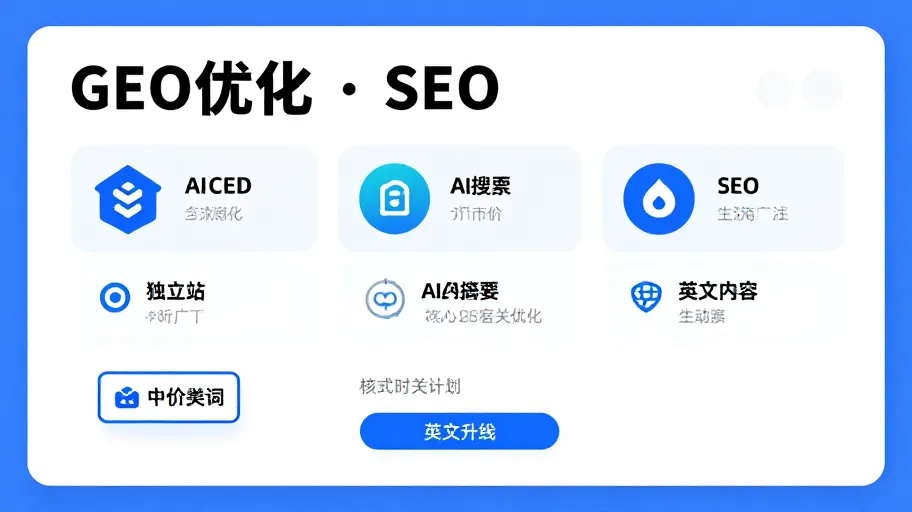
The core decision-making process for GEO optimization can be summarized in three questions: Will your potential customers seek your services through AI-powered question-answering tools? Does your content have a structured foundation that AI can reference? And can you advance this as an incremental, verifiable project without disrupting your existing SEO and independent site operations? If all three answers are positive, GEO optimization is worth initiating; if any one of them raises doubts, conduct small-scale validation first before deciding on the scale of investment.